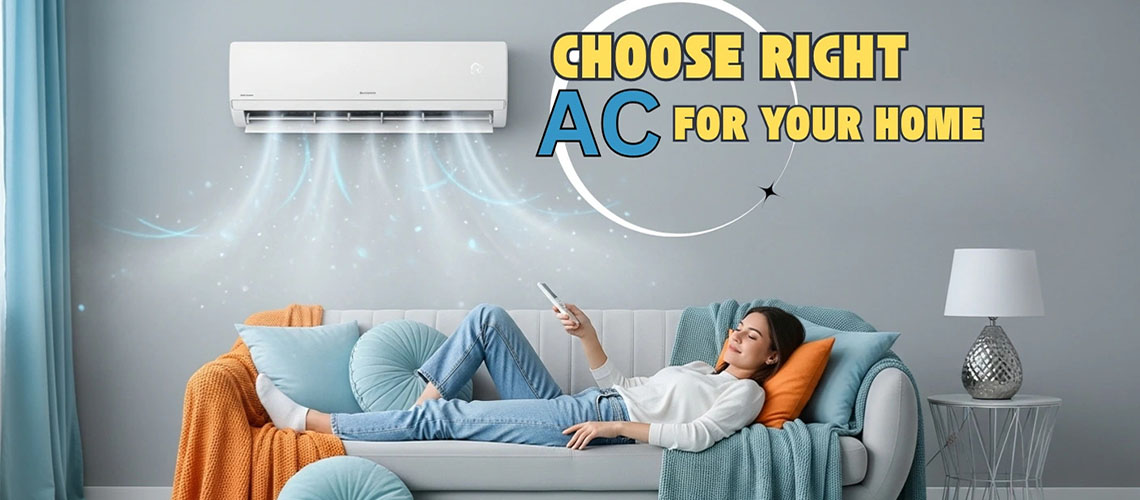

Air Conditioner Buying Guide: How to Choose the Perfect AC for Your Home
Buying an air conditioner is an important investment, especially in hot and humid climates. The right AC will keep your home cool, save electricity, and last for years. But with so many brands, types, and features available, choosing the perfect AC can feel confusing.
This guide will help you understand everything you need before buying an AC—capacity, type, energy efficiency, installation, and important features.
1. Determine the Right AC Capacity (Tonnage)
The first and most important step is selecting the correct AC size. A wrong capacity AC will either fail to cool properly or increase your electricity bill.
Recommended AC Size According to Room Size:
-
1 Ton AC – Best for small rooms up to 120 sq ft
-
1.5 Ton AC – Great for medium rooms 140–180 sq ft
-
2 Ton AC – Ideal for large rooms 200+ sq ft, halls, or offices
Tip: Rooms with high ceilings, direct sunlight, or more occupants may require a higher ton AC.
2. Choose the Type of AC
✔ Split AC
-
Quiet operation
-
Better cooling performance
-
Ideal for bedrooms and living rooms
-
Modern design
✔ Window AC
-
Affordable
-
Easy to install
-
Suitable for small rooms
✔ Portable AC
-
Moveable
-
No permanent installation needed
-
Good temporary solution
Choose based on your room structure and installation availability.
3. Inverter vs Non-Inverter Technology
Inverter AC
-
Saves up to 40–60% electricity
-
Provides consistent cooling
-
Low noise
-
Longer lifespan
Non-Inverter AC
-
Budget-friendly
-
Good cooling but higher energy consumption
Recommendation: If budget allows, always choose an Inverter AC.
4. Check Energy Efficiency (EER/SEER Rating)
Energy rating determines how much electricity your AC will consume.
-
5 Star AC – Highest energy saving
-
3 Star AC – Moderate energy saving
-
1 Star AC – Least energy saving
Higher star = lower electricity bill.
5. Important AC Features to Look For
✔ Copper Condenser
More durable, better cooling, easy to maintain.
✔ Air Purification Filters
Removes dust, allergens, bacteria.
✔ Turbo Cooling Mode
Cools the room faster.
✔ Sleep Mode
Adjusts temperature at night and saves power.
✔ Wi-Fi Smart Control
Operate your AC using a smartphone.
✔ Anti-Bacterial & Anti-Dust Technology
Keeps your indoor air healthy.
6. Understand Installation Requirements
Proper installation is key for perfect cooling.
-
Always use certified technicians
-
Ensure correct pipe length
-
Maintain proper airflow for the outdoor unit
-
Check gas pressure after installation
-
Install stabilizer if voltage fluctuates frequently
7. Maintenance & Service Cost
Every AC needs regular servicing to maintain performance.
Recommended servicing: Every 3–4 months
Servicing includes:
-
Cleaning the filters
-
Checking gas pressure
-
Removing dust from coils
-
Inspecting drain pipes
Good maintenance = long-lasting AC + low electricity bills.
8. Budget & Brand Selection
Choose a brand based on:
-
Performance
-
After-sales service
-
Warranty
-
Spare parts availability
Popular and reliable AC brands include Gree, LG, Samsung, Daikin, Carrier, General, Walton, Haier etc.